Battle tactics of La Reconquista
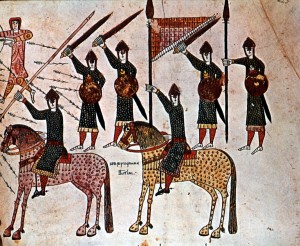
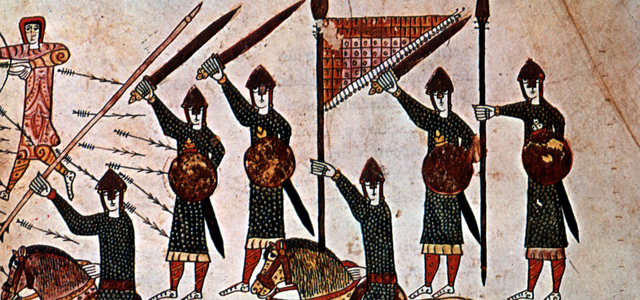
Light cavalry The Jinetes, or ‘Genetours’ as the English called them, took their name from the jennets or light coursers which they rode. They were equipped in a semi-Moorish fashion, with a round steel cap, a large shield, a quilted gambeson, and two long javelins, which they launched at the enemy with good aim, even when galloping at full speed.
Their tactics were not to close, but to hover round their opponents, continually harassing them, till they should give ground or break their formation, when a chance would occur of pushing a charge home.
What such fighting was like is best shown by the interesting picture of the Battle of Higueruela, now in the Escorial, which represents the famous victory of John II in the year 1431 over Mohammed, King of Granada.
The whole front of space between the armies is filled with whirling mass of the light horse of the two sides, engaged in single combats with the javelin, which is sometimes hurled and sometimes used to thrust.
The Spanish jinetes wear a certain amount of armour, heavier than that of their Muslim opponents, many of whom have only a shield to protect them. Behind this mêlée, we see on one side the Spanish heavy cavalry in two lines, one led by the Constable of Castile, the other by the King, with two solid masses of infantry in their rear.
The Moors on the other side of the field show, behind their screen of skirmishing light horse, two lines, the first mainly composed of six solid squadrons of mounted lancers, the second entirely of infantry in eight columns …
Such troops would have been formidable foes to infantry not armed with missile weapons, or to dismounted men-at-arms; but against the combination of archers and knights they were ineffective. At Naverette … they were shot down helplessly by the archers, long before they could get near enough to use their javelins.
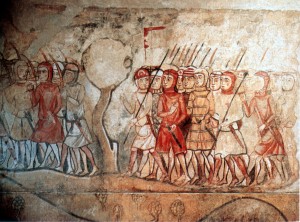
They do not seem to have been very highly esteemed by their opponents in this campaign, and are accused of being too prone to fall into the skirmishing tactics of their compatriots the ‘genetours’ when their first charge failed.
The Spanish infantry appeared in considerable numbers on the field, the chartered towns contributing spearmen and crossbowmen, while considerable numbers of slingers were also used. But they played a poor part in the campaign of 1367, and were of no practical use at Navarette.
From: Sir Charles Oman, A History of the Art of War in the Middle Ages
The full article - AD 1212 Las Navas de Tolosa: Turning point in Spain's long crusade - can be found in issue 22 of Military History Matters.