FRONTLINE FIGHTER - Zeppelin Crew
Taken from the first of our Frontline series analysing first-hand accounts of war, this box looks at what it took to be a WWI Zeppelin crew-member.
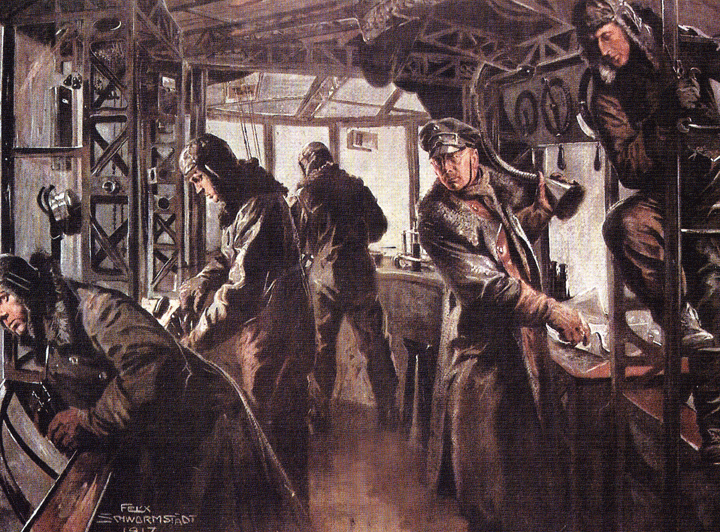
Zeppelin crew were a military elite. All had to be highly skilled, exceptionally fit and resilient, and possessed of great courage and steady nerves. Half were machinists who worked and maintained the engines. They would be on duty for up to 24 hours in a confined space filled with ear-splitting noise and noxious fumes. Many routinely developed splitting headaches. The commander, the navigator, and the operators of rudders, elevators, and wireless were stationed in the forward control gondola. Here, as well as noise, there was bitter cold, with temperatures sometimes sinking as low as -25º. Clothing included woollen underwear, naval uniform, leather overalls, fur overcoats, leather helmets, gloves of leather and wool, boots covered by large felt overshoes, and scarves and goggles. Bread, sausage, stew, chocolate, and strong coffee provided sustenance. One or two men would also be stationed on top of the airship, occupying a combined observation and machine-gun post, standing fully exposed to the bitter draft as their vessel cruised the upper skies. Two years later, when a new generation of ‘height-climber’ Zeppelins were introduced, airships designed to operate at 20,000 feet or more, above both the maximum range of AA guns and the ceiling of home-defence fighters, the physical demands on crew became almost unbearable. As machines were buffeted by gales unknown to weather stations on the ground, as engines seized up, metalwork shattered, and instruments failed in the bitter cold, aircrew were afflicted by pounding headaches, nausea, exhaustion, and frostbite. Thus did men enter the eerie new combat zone of the sub-stratosphere.