
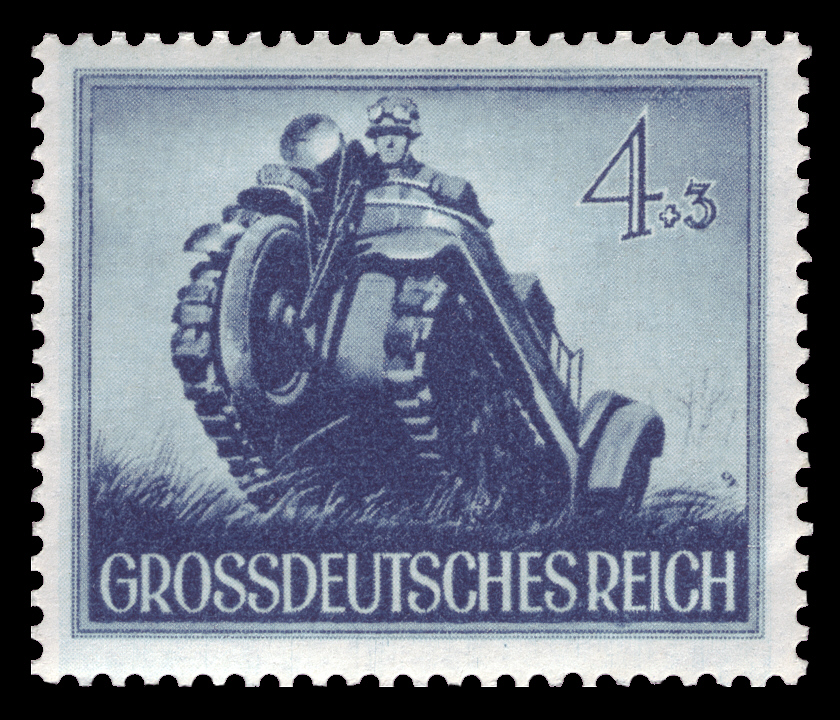
WMD - The Kettenkrad
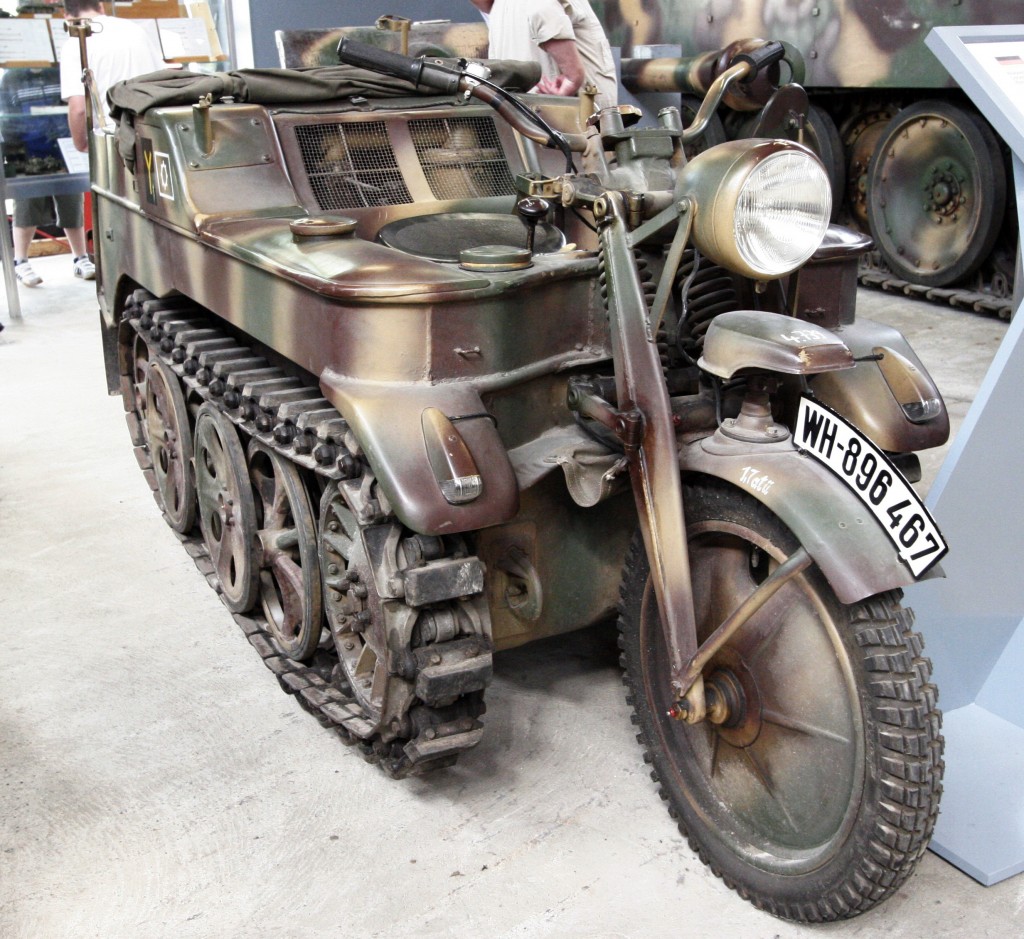
Popularly named the ‘motorcycle halftrack’, Kettenkrad translates as ‘tracked motorcycle’. Also called the SdKfz 2 or Kleines Kettenkraftrad HK 101, the Kettenkrad was designed in 1939 as a gun tractor which could pull artillery through boggy, snowy, or muddy ground where other vehicles would flounder. The Kettenkrad was tailored to fit into the cargo hold of Junkers Ju-52 tri-motor aircraft, which supplied the vehicle to airborne troops, though not via airdrop. It was manufactured by NSU in Germany, and later also by Stoewer in Poland.
Crew, accessories, and operation
Besides the driver, the Kettenkrad carried two soldiers on rear-facing seats at the back of the machine. It often pulled a 3.7mm anti-tank or 20mm anti-aircraft gun. There was also an NSU-made cargo trailer for the Kettenkrad, the Sonderanhänger 1 (Special Trailer No 1). The trailer’s unladen and gross weights were 242 and 1012 lbs. The vehicle’s front wheel gave stability to high-speed driving. The wheel provided steering via the handlebars in gentle curves. For tighter turns, the Kettenkrad automatically engaged its tread breaks. For severe off-road use, the vehicle’s manual recommended removal of the front wheel, turning the Kettenkrad into a pure tracked tractor. This configuration was effective in deep mud or loose rock where traction was at a premium and speeds were low. As NSU was not equipped to design and manufacture an engine suitable for the Kettenkrad, the designers fitted it with the proven and reliable motor from the Opel Olympia car. Because Olympias were already in military use, field mechanics were familiar with servicing its power-plant.
Uses and service
US forces encounter the Kettengrad
The US War Department published a report on the Kettenkrad in Tactical and Technical Trends in February 1943. Calling the machine a ‘German Motorcycle Tractor’, the report states US forces first encountered the vehicle during the invasion of Crete. They noted it was used for towing light trailers or guns, was deployed in the Middle East and on the Eastern Front, and that it was appropriate for airborne troops. The report documented some Kettenkrad modifications for ‘Tropical Use’. These included increased cooling-fan speed, a Solex carburettor, push-button starter, and track-link extension plates for a larger footprint in sand or swamp.
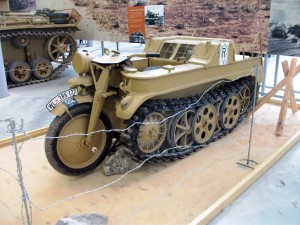
Weight: 2726 lbs unladen, 3444 lbs for combat Length: 9 ft 10 inches Height: 3 ft 11 inches Width: 3 ft 3 inches Engine: 1478cc Opel four-cylinder, 36 bhp Carburettor: Solex 32 FJ-II off-road or Opel System Carter Electrics: six-volt Front tyre: 3.50 x 19 inch, 25 psi Tracks: forged steel, 40-link Gearbox: three forward, one reverse; transfer box with off-road and on-road settings created six forward, two reverse gears. Petrol tank capacity: two tanks, 4.62 imperial gallons each Mileage: 18 mpg on-road, 13 mpg off-road Top speed: 44 mph